

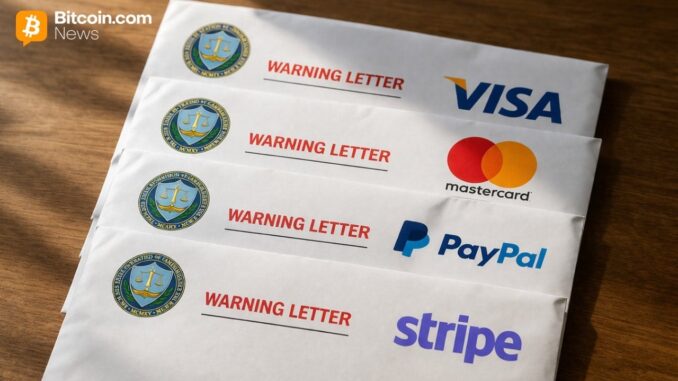

US Debanking Concerns Rise as FTC Targets Visa, Mastercard, Paypal, and Stripe Practices
Recent regulatory actions have put a spotlight on the accessibility of financial services, with federal regulators closely examining industry practices. The Federal Trade Commission (FTC) Chairman, Andrew N. Ferguson, sent warning letters on March 26 to major players in the payment industry, including Paypal, Stripe, Visa, and Mastercard, regarding customer access and adherence to the FTC Act.
The focus of regulatory scrutiny revolves around whether decisions made by these platforms to restrict user access align with their contractual obligations and meet consumer expectations. The correspondence specifically points out instances where customers were denied services based on their political or religious beliefs, raising concerns about potential unfair or deceptive practices. In a statement, Ferguson emphasized:

“The ability for law-abiding individuals to participate fully in commerce and public life hinges on their access to and participation in the financial system.”
These warning letters serve as a clear indication that any actions that deviate from stated terms or reasonable expectations could lead to further investigations or enforcement actions.
Enforcement Risks Broaden Across the Financial Landscape
The concerns highlighted in the letters extend beyond individual companies to the wider financial ecosystem, including the role of payment networks in facilitating or restricting transactions. Companies are warned that supporting third-party decisions to exclude users from their services could also come under regulatory scrutiny if such actions contradict their disclosed policies. Ferguson further added:
“It goes against American principles to deny law-abiding individuals the opportunity to operate legitimate businesses and provide for their families simply because they have drawn the attention of certain officials, activists, or even foreign governments attempting to control public discourse.”
Previous enforcement actions by the FTC against payment platforms for misleading fee disclosures, contract terms, and enabling fraudulent activities reinforce the agency’s stance. The recent warnings underscore that similar scrutiny could be applied to account restrictions or service denials if they do not align with the representations made to users. Reference was also made to a 2025 executive order that underlines the unacceptability of denying services based on political beliefs, religious affiliations, or lawful activities, setting a standard for compliance among major payment providers.
Frequently Asked Questions 🧭
Why are payment companies under FTC scrutiny?
Regulators are investigating whether account restrictions violate disclosed policies or consumer expectations.
What potential risks do Paypal, Visa, Mastercard, and Stripe face?
They could face investigations or enforcement actions if their practices are deemed unfair or deceptive.
How might this impact investors in payment firms?
Increased regulatory pressure could lead to higher compliance costs and legal risks for investors.
What broader trend does this signify for the fintech industry?
Authorities are expanding oversight into how platforms manage access to financial services.



Be the first to comment