


RPA vs AI: The Evolution of Automation in Business Processes
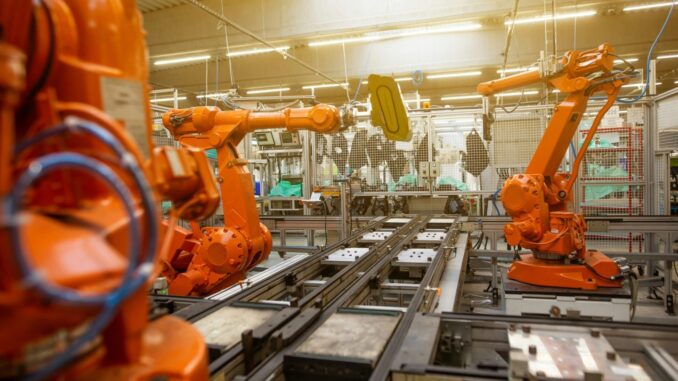
Robotics Process Automation (RPA) has been a game-changer in streamlining manual tasks within business processes, eliminating the need for AI systems. By leveraging software bots that adhere to set rules, organizations can automate repetitive duties such as data entry, invoice processing, and even report generation to some extent. Its adoption has surged across various sectors, particularly in finance, operations, and customer support.
Over the years, RPA technology has matured. While it continues to be utilized, the complexity of business processes has increased. Many systems now handle unstructured data like messages and documents, posing a challenge for rule-based automation that relies on predefined steps and structured formats. RPA thrives in stable environments where processes remain constant. However, when conditions change or inputs vary, bots may encounter failures or require updates, leading to maintenance overhead and diminishing the automation’s long-term value.
Gartner has highlighted the emergence of more adaptive automation systems in the market, designed to tackle variability and uncertainty by integrating automation with machine learning or language models, enabling a broader range of inputs to be processed.

Transitioning from RPA Rules to AI-Driven Automation
The advent of Artificial Intelligence (AI) has revolutionized the automation landscape, allowing systems from established RPA vendors like Appian and Blue Prism to interpret context and adjust their operations, especially beneficial for tasks involving text or images.
Large language models have the capability to summarize documents, extract crucial information, and respond to queries in natural language, facilitating automation in areas that were traditionally challenging to manage. Research by McKinsey & Company suggests that generative AI could automate decision-making and communication tasks, rather than mundane data processing.
This shift does not signify the replacement of automation but rather its modification. Instead of constructing rule chains, businesses can leverage AI to handle variations in input media, making automation more flexible and adaptable to diverse inputs without the need for reconfiguration.
While AI systems offer promising benefits, they may yield inconsistent outputs and exhibit unpredictable behavior. Enterprises can combine AI with existing automation tools, utilizing each where it aligns best. Striking the right balance – known as intelligent automation – is a prominent topic at industry events and within the RPA and AI media sphere.
Where RPA Aligns with AI
Despite the evolving landscape, RPA remains relevant in numerous scenarios. Tasks involving structured data and stable workflows continue to benefit from rule-based automation. Common examples include payroll processing, compliance checks, and system integrations.
In these contexts, RPA’s predictability serves as an advantage. Bots adhere to defined steps and yield consistent outcomes, which is invaluable in regulated environments. Processes like financial reporting and auditing necessitate stringent control and traceability, making RPA indispensable.
Rather than being phased out, RPA is frequently integrated with AI. Automation workflows may commence with AI systems interpreting inputs, which are then passed on to RPA bots for execution. This amalgamation enables companies to expand automation without discarding existing systems.
Blue Prism and the Shift towards Intelligent Automation
Leading vendors rooted in RPA are adapting to this transformation. Blue Prism, now under SS&C Technologies, has broadened its focus to encompass what it terms as intelligent automation. This approach merges RPA with AI tools capable of processing intricate inputs.
Platforms now blend automation with functionalities like document processing and decision support, often through integrations with AI tools.
The transition towards AI-enabled automation also alters how platforms are utilized. Workflows amalgamate data sources, decision points, and execution steps into a unified process.
A Gradual Shift, Not a Complete Overhaul
Many organizations continue to rely on existing RPA systems, particularly in scenarios where processes are well-established and stable. Replacing these systems would entail significant time and investment, which may not always be warranted.
Instead, the evolution is gradual. Companies can integrate AI capabilities to expand automation’s scope, while RPA remains operational for tasks where it excels. This shift may influence how automation is devised and implemented over time, but rule-based systems will remain indispensable.
For more insights into enterprise technology innovation, consider joining TechEx events in Amsterdam, California, and London. Covering AI, Big Data, Cyber Security, IoT, Digital Transformation, Intelligent Automation, Edge Computing, and Data Centers, TechEx brings together global leaders to share real-world use cases and in-depth insights.
AI News is powered by TechForge Media. Explore upcoming enterprise technology events and webinars for more information.



Be the first to comment